
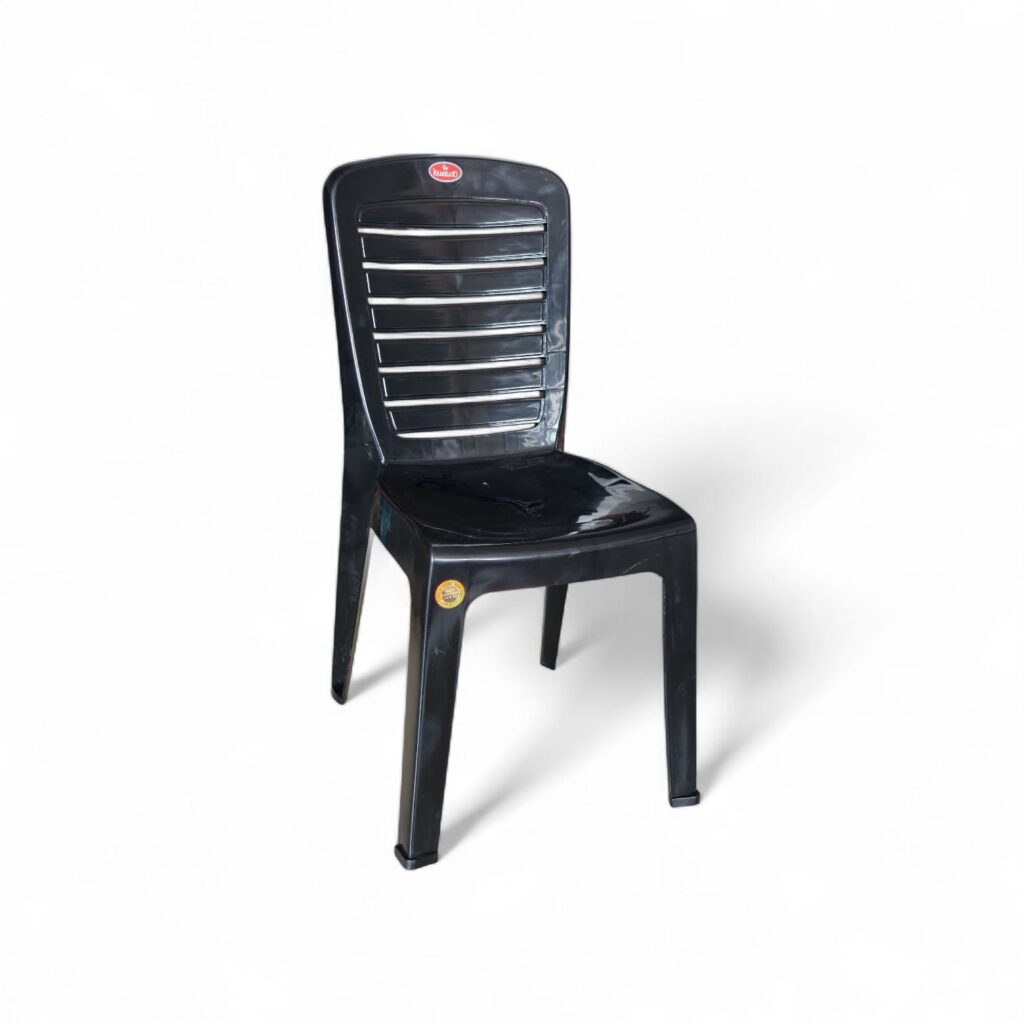
Each season, the time prior to Onam is similar in the catering circles all over Kerala, Last-minute phone calls to ask whether additional chairs could be set up in time for Thiruvonam morning. Sadya seating is among the details of planning that seem easy until the room is half-full and one realizes that the chairs aren’t able to fit into the rows properly or are heavy enough for the servers to move between the batches.
We’ve provided seating at community Sadya occasions, Wedding halls, Wedding venues, and Catering establishments across Kerala for a long time. If there’s a constant lesson we’ve learned that is this: Armless chairs aren’t a pricey compromise. They’re the best option for an engineering design in a traditional bench-and-floor seating design. If you’re comparing the Chairman Furniture – Best Plastic Chair Brands in Kerala for this Onam season, the decision usually comes down to fewer factors than people expect — and most of them relate to how a hall actually gets filled and cleared during a Sadya.
Why Armless Chairs Specifically Suit Sadya Seating
A traditional Sadya is served in long rows, guests seated shoulder to shoulder, banana leaves laid edge to edge on long tables or directly on the floor. Armrests, which are genuinely useful for standalone dining or office use, become a liability in this format for one simple reason: they eat horizontal space.
We measured this directly during a wedding hall project in Thrissur last year. Swapping armed chairs for Chairman’s armless models in the same hall let the organizer fit two additional guests per eight-foot row — across a 40-row hall, that’s an extra 80 seated guests without touching the floor plan. For caterers working on a per-row rental or a fixed hall capacity, that difference changes the entire day’s logistics.
There’s a second, less obvious reason armless chairs work better for Sadya seating: stacking and storage. Armless chairs stack more tightly and evenly than armed ones, which matters enormously when a catering crew needs to clear 300 chairs from a hall between the lunch and evening sessions. Among Armless plastic chair suppliers in Kochi, this stacking efficiency is one of the most requested specifications we hear from event planners — not comfort alone, but how fast a hall can be turned around.
What Actually Makes a Plastic Chair “Sadya-Ready”
Not every armless plastic chair is built the same way, and this is where a lot of first-time buyers get caught out by price alone. Three things matter more than anything else for high-turnover festival seating:
1. Load-bearing consistency, not just peak weight. A chair rated for 120 kg once, in a lab, isn’t the same as a chair that holds that weight reliably after its two-hundredth stacking cycle. Repeated stacking stresses the leg joints first, and cheaper injection-molded chairs often develop hairline stress cracks near the base within a single festival season.
2. UV-stabilized resin. Many Onam events run partly outdoors, under pandals with open sides. Plastic that isn’t UV-stabilized turns brittle and discolored within one or two seasons of sun exposure — a detail that separates genuinely durable stock from chairs that look fine in a showroom but fail outdoors.
3. A wide, low center-of-gravity base. For a chair used continuously by children, elders, and everyone in between across a long seated meal, base stability matters more than most people initially think to check for. This is also one of the areas we get the most direct feedback on from repeat catering clients, who tend to notice within a season which suppliers cut corners here.
Chairman built our own manufacturing checks around exactly these three points, and it’s why caterers who’ve worked with us for multiple Onam seasons keep reordering from the same product line rather than shopping around each year for whichever bulk deal looks cheapest.
A Real Sourcing Example
One of our long-standing clients, a catering business operating across Ernakulam district, runs an average of 40 Sadya events during the Onam season alone. Two years ago, they were sourcing chairs from three different local suppliers, mixing armed and armless stock depending on availability. The result was inconsistent stacking heights, mismatched chair dimensions across events, and a noticeable jump in breakage complaints during peak week.
After consolidating to a single armless design sourced from us, their reported breakage rate dropped by roughly a third over the following season, largely because a uniform batch of chairs stacks and transports more predictably than a mixed one. This is a pattern we’ve now seen repeat across multiple clients: standardizing on one design from one of the Best Quality Plastic Chair Suppliers in Kerala tends to solve logistics problems that buyers initially assume are staffing issues, not sourcing ones.
How to Actually Plan Chair Quantities for a Sadya Hall
A rough but reliable planning formula we share with new catering clients:
- Take your row’s length in feet and divide by 1.6 for chairs that are armless (versus approximately 1.9 for arm-chairs) to determine the number of seats in a row.
- Create a buffer of 5-8% to prevent breakages or last-minute guest additions and seating for staff.
- Confirm stacking height clearance, if chairs need to be stored between the lunch and evening sittings — most halls have a fixed storage corridor width that limits how many chairs can be pre-stacked at once.
- You must place your order for at least 2 weeks in advance of Onam but not the week before. The peak-season demand in Kerala makes it possible for even the most well-stocked suppliers to experience delays in the fulfillment process at the beginning of Onam. Malayalam Month of Chingam.
Conclusion
Sadya seating looks like a simple bulk-purchase decision until the hall is actually being filled, cleared, and refilled under time pressure. Armless chairs solve real, measurable problems — row density, stacking speed, and storage efficiency — that matter far more during a live event than they do on a spec sheet. If you’re planning to source the Onam season, focusing on high-quality batches from a single source will help you save time and money than trying to find the most affordable price per unit from several suppliers.